Fingers That Speak: The Ancient Science of Mudras Finding a New Home in American Wellness
When the Hands Become a Prayer
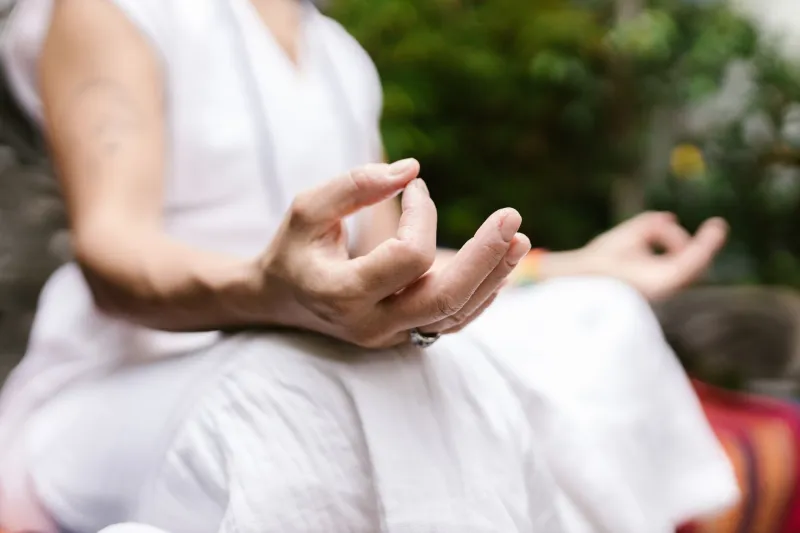
There is a moment in nearly every yoga class across America when the instructor quietly says, "Bring your hands to Anjali Mudra — palms together at the heart." Most students comply instinctively, without knowing they are performing a gesture that has been practiced in the Indian subcontinent for over three thousand years. That single hand position, simple as it appears, carries within it a universe of spiritual intention, physiological significance, and cultural heritage rooted deeply in the traditions of Hinduism, Buddhism, and Indian classical dance.
At Krushna Kunj, we believe that understanding where these practices come from is as important as embracing them. And so, as mudras move from the temples of Tamil Nadu and the dance stages of Manipur into the wellness studios of Los Angeles and the app stores of Silicon Valley, we ask: what does this migration mean — for practitioners, for culture, and for the traditions themselves?
What Exactly Is a Mudra?
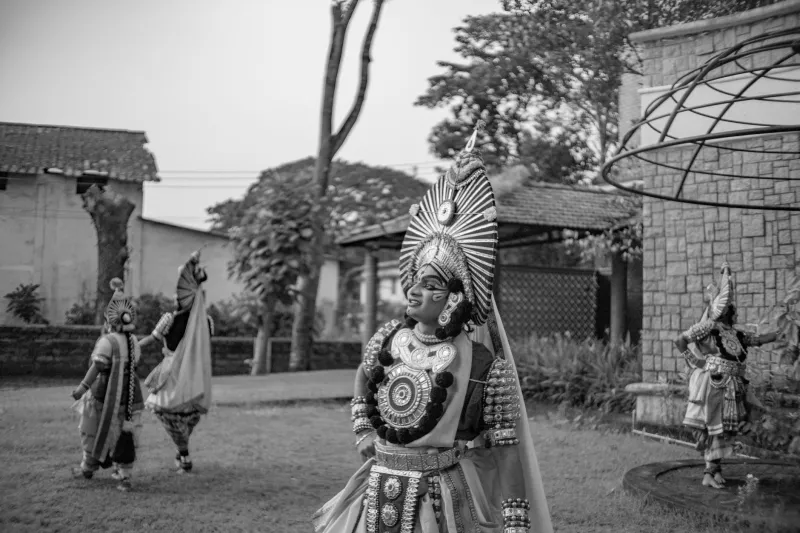
The Sanskrit word mudra translates loosely as "seal" or "gesture," but that definition barely scratches the surface. In Indian classical dance forms such as Bharatanatyam and Odissi, mudras serve as a sophisticated visual vocabulary — entire narratives of devotion, nature, and mythology are conveyed through the precise positioning of fingers, palms, and wrists. In yogic and tantric traditions, they are understood as energetic seals that redirect the flow of prana, or life force, throughout the body. In Ayurvedic medicine, specific mudras are believed to balance the five elements — earth, water, fire, air, and space — that correspond to each finger.
There are over one hundred recognized mudras catalogued in ancient texts such as the Natyashastra, the foundational treatise on Indian performing arts attributed to the sage Bharata Muni. Each carries its own name, meaning, and prescribed effect. Gyan Mudra, formed by touching the tip of the index finger to the tip of the thumb, is associated with wisdom and mental clarity. Prana Mudra is said to invigorate life energy. Shuni Mudra, connecting the middle finger to the thumb, is linked to patience and discipline.
The American Wellness Embrace
In the United States, the conversation around mudras has shifted considerably over the past decade. What was once considered an esoteric element of Eastern spiritual practice is now appearing in mainstream wellness contexts with increasing frequency and sophistication.
Yoga instructors across the country report that student curiosity about mudras has grown substantially. "Five years ago, maybe one or two students in a class of twenty would ask about the hand gestures," says a senior yoga instructor based in Austin, Texas, who has been teaching Hatha and Kundalini yoga for over fifteen years. "Now I get questions every single session. People want to understand the why behind what they are doing with their hands. They want the full picture."
That hunger for depth has created space for more intentional mudra instruction in American studios. Workshops dedicated entirely to mudra practice — their origins, their technique, and their integration into daily mindfulness routines — are becoming a staple offering at wellness centers from Seattle to Miami. The clientele is diverse: longtime yoga practitioners deepening their practice, newcomers drawn by curiosity, healthcare workers exploring complementary approaches to patient care, and a growing number of Indian-Americans reconnecting with inherited traditions.
Neuroscience Enters the Conversation
Beyond the spiritual dimension, a small but growing body of scientific inquiry is beginning to examine what, if anything, happens physiologically when specific mudras are practiced consistently. Researchers in the fields of neuroscience and psychophysiology have noted that the hands contain an extraordinarily dense concentration of nerve endings and occupy a disproportionately large area of the brain's sensory and motor cortices — a phenomenon sometimes referred to as the "cortical homunculus."
The hypothesis gaining traction among some researchers is that deliberate, sustained hand positions may stimulate specific neural pathways, potentially influencing the autonomic nervous system. Preliminary studies — though still limited in scale and scope — have explored mudras in the context of stress reduction, attention regulation, and even respiratory function. While the scientific community appropriately calls for larger, more rigorous trials, the early signals are intriguing enough to merit serious academic attention.
Dr. Anita Rao, a neuropsychologist at a research university in the northeastern United States who has studied mind-body practices for over a decade, notes that "the interface between intentional physical gesture and cognitive state is an under-researched area with genuine potential. The Indian tradition has essentially been running a multi-thousand-year experiment on this. Western science is only beginning to design the instruments to measure what practitioners have long described."
Mudras Go Digital: Tech, Apps, and Generation Z
Perhaps no development better illustrates mudras' mainstream arrival in America than their integration into digital wellness platforms. Several meditation and mindfulness applications now feature dedicated mudra modules, complete with animated hand diagrams, guided breathing sequences, and progress-tracking features.
For Generation Z audiences — digital natives accustomed to gamified learning — these platforms represent a genuinely accessible entry point. Apps such as these present mudra practice through short, visually engaging video tutorials, daily challenge streaks, and community sharing features that allow users to post their practice sessions. The result is a generation of young Americans who may encounter Chinmaya Mudra through a smartphone screen before they ever set foot in a yoga studio.
This development is not without nuance. Scholars of Indian cultural heritage and practitioners of classical Indian arts have raised thoughtful questions about context, attribution, and the risk of reducing a rich, multidimensional tradition to a set of finger positions divorced from their philosophical and spiritual framework. These are legitimate concerns that deserve ongoing dialogue between digital platform creators, cultural educators, and community stakeholders.
Honoring the Source
At Krushna Kunj, we hold firmly to the belief that appreciation without acknowledgment is incomplete. Mudras did not emerge from a wellness trend. They were born in temples, refined in gurukuls, encoded in classical texts, and passed down through generations of devoted practitioners across the Indian subcontinent. When American audiences engage with these gestures, they are touching something ancient and sacred.
The most meaningful integration of mudras into American wellness culture will be one that carries the source forward — that names the tradition, honors the lineage, and creates genuine curiosity about the broader cultural world from which these practices spring. Organizations such as classical Indian dance academies, Hindu cultural centers, and diaspora arts institutions play an irreplaceable role in that education.
As these silent hand languages continue to find new voices in American studios, apps, and wellness spaces, may they carry with them the full weight of their origin — not as a relic, but as a living, breathing inheritance that belongs to all who approach it with sincerity and respect.
Krushna Kunj invites readers to explore our broader coverage of Indian spiritual traditions and their resonance in contemporary American life.