Gathered in Devotion: How Indian Bhakti Circles Are Transforming the Way American Women Form Lasting Bonds
A Different Kind of Gathering
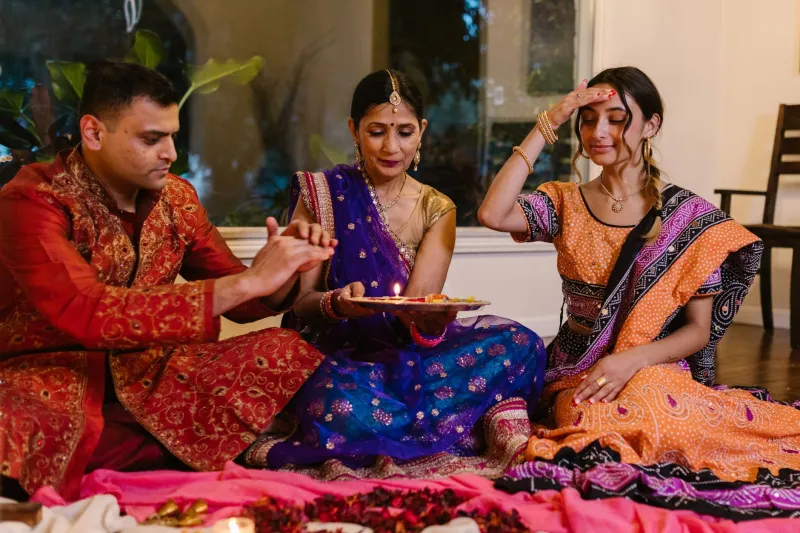
On a Saturday evening in a living room in Oakland, California, twelve women sit in a loose circle on woven mats. Candles flicker beside a small brass murti of Radha and Krishna. Someone begins tapping a mridangam softly, and within moments, voices rise together in a call-and-response chant that dates back to sixteenth-century Bengal. There is no agenda, no facilitator's script, and no name tags. What unfolds over the next two hours is something that resists easy categorization—part worship, part music, part conversation, and part something that those present describe simply as belonging.
This is a bhakti sangha, and gatherings like it are quietly multiplying across American cities—from Atlanta and Chicago to Denver and Brooklyn. Organized almost entirely by women, these circles draw on India's centuries-old tradition of devotional community, the satsang, to address a hunger that therapists, sociologists, and the women themselves name with increasing frankness: the epidemic of shallow connection in contemporary American social life.
What Bhakti Actually Means
The word bhakti is often translated as devotion, but its full resonance is considerably richer. Rooted in the Sanskrit verb bhaj—meaning to share, to participate in, to belong to—bhakti describes a path toward the divine that moves not through intellectual mastery or austere renunciation, but through love. The bhakti movement that swept across India between the seventh and seventeenth centuries was, among other things, a radical democratization of spiritual life. Poet-saints such as Mirabai, Andal, and Akka Mahadevi wrote and sang in vernacular languages, making devotional experience accessible to women and those outside priestly hierarchies.
That historical subversiveness is not lost on the American women now reviving these practices. Many organizers describe bhakti not merely as a religious form borrowed from Hinduism, but as a framework for a particular quality of relationship—one grounded in shared vulnerability, mutual witnessing, and a recognition that genuine community requires something more than proximity or shared professional interest.
The Problem with Modern Friendship
Research on adult loneliness in the United States paints a sobering picture. A 2023 report from the U.S. Surgeon General identified loneliness as a public health crisis, noting that nearly half of American adults reported measurable feelings of isolation. Women, despite being socialized toward relational investment, are not immune. Sociologists have observed a particular pattern among adult women in America: friendships that are maintained largely through scheduled efficiency—coffee dates squeezed between obligations, group chats that substitute for presence, social media interactions that simulate intimacy without producing it.
"I had plenty of acquaintances," says Priya Nair, who co-founded a kirtan circle in Minneapolis in 2021. "I had colleagues I liked, neighbors I waved to, friends I texted. What I didn't have was anyone who knew me in the way I wanted to be known. The kind of knowing that requires you to actually sit still with another person."
Nair, who grew up in a Tamil household in suburban Ohio, describes reconnecting with devotional music during the isolation of the pandemic. She began hosting small kirtan evenings in her home, initially inviting only other Indian-American women. Within six months, the circle had expanded to include women of diverse backgrounds—Black, Latina, white, and South Asian—united not by ethnicity but by a shared appetite for something slower and more substantive.
What Happens Inside the Circle
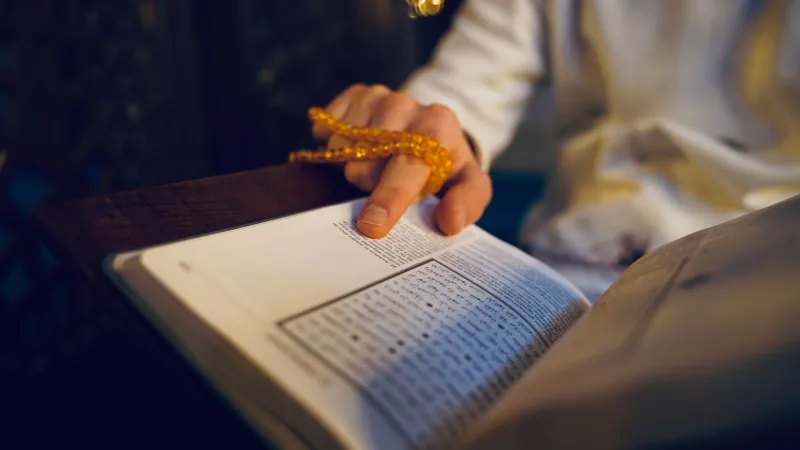
The structure of a bhakti sangha varies by organizer and tradition, but certain elements recur. Kirtan—the communal chanting of divine names and sacred poetry—is nearly universal. Participants do not need musical training or familiarity with Sanskrit; the call-and-response format is deliberately inclusive. Many circles incorporate readings from bhakti literature, brief periods of silent meditation, and shared meals prepared with intentional care.
What distinguishes these gatherings from conventional wellness events or women's networking groups, participants say, is the deliberate absence of self-promotion. There is no professional networking, no Instagram-worthy aesthetic being curated for an audience, and no performance of having-it-together. The devotional frame creates what several organizers describe as a kind of permission—to arrive tired, uncertain, or emotionally unguarded in ways that ordinary social settings do not accommodate.
"Kirtan is equalizing in a way that almost nothing else is," says Ananya Krishnamurthy, who leads a monthly sangha in Decatur, Georgia, that draws women ranging in age from their mid-twenties to their late sixties. "When you're chanting together, nobody's resume matters. Nobody's zip code matters. You're just voices in a room, and somehow that creates the conditions for real honesty afterward."
The Role of Spiritual Friendship
The Sanskrit term kalyana mitra—often translated as noble or spiritual friend—describes a concept with deep roots in Indian contemplative traditions. A kalyana mitra is not simply a companion who provides comfort, but one whose presence actively supports another's inner growth. This idea, which appears in both Hindu and Buddhist philosophical literature, has become something of a touchstone for women in these circles.
"We talk about what it would mean to actually be that for each other," says Meena Iyer, a therapist in the San Francisco Bay Area who participates in a bhakti circle and incorporates its principles into her clinical practice. "Not just someone who validates whatever you're already thinking, but someone who cares enough about your deeper flourishing to be present with you through difficulty."
Iyer observes that many of her clients—women in their thirties and forties—express a grief about friendship that they find difficult to articulate. "They don't lack social contact. What they lack is depth. And I think the bhakti framework offers a language and a container for the kind of depth they're searching for."
A Living Tradition, Not a Trend
Organizers of these circles are notably thoughtful about the question of cultural stewardship. Several emphasize that they are not packaging bhakti as a wellness product or a self-improvement technique, but attempting to transmit something that has genuine roots—roots that belong, in particular, to the women in the Indian diaspora who carry these traditions as inheritance.
At the same time, many express that the bhakti tradition itself, with its historical openness and its insistence that devotion transcends caste, class, and formal religious affiliation, invites participation across difference. The challenge, as they describe it, is maintaining that invitation without flattening the tradition into something unrecognizable.
"I want people who come to understand that they're stepping into something that has a history, a lineage, a depth," says Nair. "This isn't a new concept someone invented for a wellness app. These are practices that women have used for centuries to sustain each other through real hardship. That's worth honoring."
The Quiet Revolution of Sitting Together
In an era saturated with connectivity tools that paradoxically deepen isolation, there is something quietly radical about a group of women choosing to sit in a room together, chant ancient names of the divine, and then simply talk—honestly, unhurriedly, without an agenda. The bhakti sangha does not promise to solve loneliness with a program or a protocol. It offers something older and less quantifiable: the experience of being genuinely witnessed by others who have chosen, at least for an evening, to prioritize presence over performance.
For the women who return week after week to these circles, that offering is not a supplement to their lives. It has become, for many, a foundation.