Ancient Devotion, New Disciples: How Gen Z Americans Are Falling in Love with India's Sacred Music Traditions

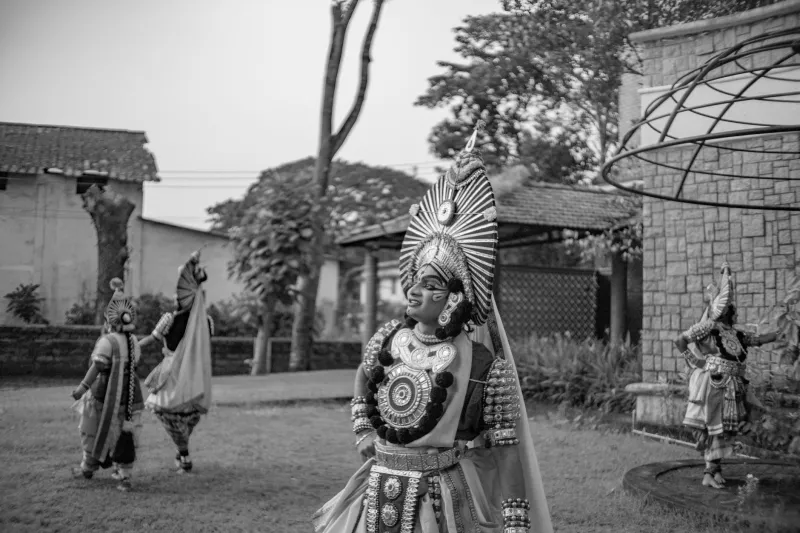
Photo by Photo by Mike Von on Unsplash on Unsplash
In a Brooklyn apartment, a 22-year-old graphic design student named Maya has her laptop open to a six-hour Ustad Nusrat Fateh Ali Khan concert recording. She is not South Asian. She has never visited India or Pakistan. Yet she describes the experience of listening to qawwali as "the first music that made me feel like sound could actually be a place you live inside."
Maya is not alone. Across the United States, a generation raised on algorithmically curated pop and lo-fi beats is quietly discovering something far older and, to many of them, far more nourishing: the devotional music traditions of the Indian subcontinent. Bhakti, qawwali, dhrupad, and regional folk bhajans are appearing on Gen Z playlists in numbers that would have seemed improbable just a decade ago. The question worth asking is not simply why now, but what does this moment mean for both the traditions themselves and the young Americans who are embracing them?
The Sound of Longing in a Distracted Age
Bhakti, at its philosophical core, is the path of loving devotion. Its musical expressions—stretching back to poet-saints like Mirabai, Kabir, and Tukaram—were never designed to be background noise. They demand presence. They reward patience. In a cultural moment defined by fifteen-second video clips and attention fragmentation, these qualities have become, paradoxically, radical.
Dr. Ananya Krishnamurthy, a musicologist and visiting faculty member at the University of California, Berkeley, has observed this pattern among her students for several years. "There is a real hunger among young people for music that does not treat the listener as a passive consumer," she explains. "Dhrupad, for instance, requires you to surrender to its architecture. You cannot multitask. That quality of total absorption is exactly what a generation overstimulated by digital noise is beginning to crave."
Dhrupad, one of the oldest surviving forms of Hindustani classical music, is built on slow, meditative alap sections that can unfold over thirty minutes or more before a composition fully reveals itself. On the surface, it seems like an unlikely candidate for viral popularity. Yet clips of the Dagar Brothers and the Gundecha Brothers performing dhrupad have accumulated millions of views on YouTube, with comment sections filled with messages from American, European, and Latin American listeners describing transformative experiences.
Streaming Platforms and the Democratization of the Sacred
The infrastructure enabling this cultural crossing is worth examining carefully. Spotify's editorial playlists—particularly those categorized under "world music," "meditation," and "focus"—have introduced countless American listeners to bhajan recordings and Sufi qawwali without those listeners necessarily understanding what they were hearing. The algorithm, designed to optimize engagement, has inadvertently become a gateway to devotional lineages.
Apple Music's editorial team has similarly curated playlists featuring artists like Abida Parveen, whose Sufi devotional singing occupies a space between qawwali and classical ghazal, and Pandit Jasraj, whose thumri and bhajan recordings carry the weight of an entire classical tradition. These placements matter enormously. They signal cultural legitimacy to audiences who might otherwise never encounter such music.
Social media has played an equally significant role. TikTok and Instagram Reels have circulated short excerpts from qawwali performances—particularly the call-and-response climaxes that build to ecstatic intensity—and these clips have generated substantial engagement among viewers with no prior familiarity with the tradition. Comments frequently express bewilderment alongside wonder: "I don't know what this is but I've watched it forty times."
Artists Building Bridges Between Worlds
A new generation of artists is actively facilitating this crossing, crafting work that honors devotional roots while remaining accessible to Western ears. Brooklyn-based composer and sitar player Anoushka Shankar has long occupied this territory, but younger artists are now doing so with a distinctly Gen Z sensibility.
Collaborations between South Asian classical musicians and American producers working in ambient, electronic, and indie folk genres have created hybrid recordings that introduce devotional melodic structures and poetic themes to listeners who might never attend a classical concert. These are not mere fusion experiments. At their best, they function as genuine translations—carrying the emotional and spiritual intent of the original tradition into new sonic contexts.
Muzician and vocalist Priya Darshini, based in Los Angeles, has spoken publicly about her intentional effort to present bhajans in settings that feel welcoming to non-Indian audiences. "The poetry of Mirabai is not culturally exclusive," she has noted. "Longing for the divine is a human experience. When I sing her words in English translation alongside the original Hindi, I watch American audiences recognize something they already feel but did not have language for."
A Countercultural Impulse
Perhaps what is most striking about this moment is its countercultural character. Many young Americans drawn to bhakti traditions are explicitly framing their interest as a rejection of mainstream popular music's values—its emphasis on celebrity, consumption, and emotional superficiality.
For these listeners, devotional music represents something genuinely alternative: music made not to sell a product or construct a personal brand, but to dissolve the self in something larger. The irony that this "alternative" is actually among the oldest musical cultures on earth is not lost on them. Many describe their discovery of bhakti or qawwali as a kind of homecoming to something they did not know they had been missing.
This is precisely the kind of cultural moment that Krushna Kunj exists to document and celebrate. When Indian musical heritage finds resonance in the hearts of young Americans navigating a complicated world, it speaks to the universal depth of a tradition that has always understood the human need for transcendence.
Preserving Integrity Amid Popularity
Not everyone within these musical communities welcomes the new attention without reservation. Senior practitioners and scholars raise legitimate concerns about decontextualization—the risk that devotional music stripped of its philosophical and theological grounding becomes merely aesthetic, a mood rather than a path.
These concerns deserve serious engagement. The guru-shishya tradition that has transmitted dhrupad and other classical forms across centuries depends on deep, sustained relationships between teacher and student. Streaming a concert is not equivalent to sitting at a master's feet for years. Acknowledging this distinction is not elitism; it is honesty about what these traditions are and what they require to remain alive.
The most thoughtful musicians working at this cultural intersection hold both realities simultaneously: genuine enthusiasm for new audiences is compatible with clear-eyed acknowledgment that surface-level engagement is only a beginning. The invitation these traditions extend is always toward greater depth, not merely greater exposure.
For the young Americans currently at the threshold—moved by a qawwali recording they stumbled upon at midnight, or arrested by a dhrupad alap that seemed to slow time itself—that invitation is open. Where it leads depends entirely on how seriously they choose to accept it.