A Name That Carries the Universe: Why Indian-American Families Are Returning to Sanskrit in the Age of Assimilation
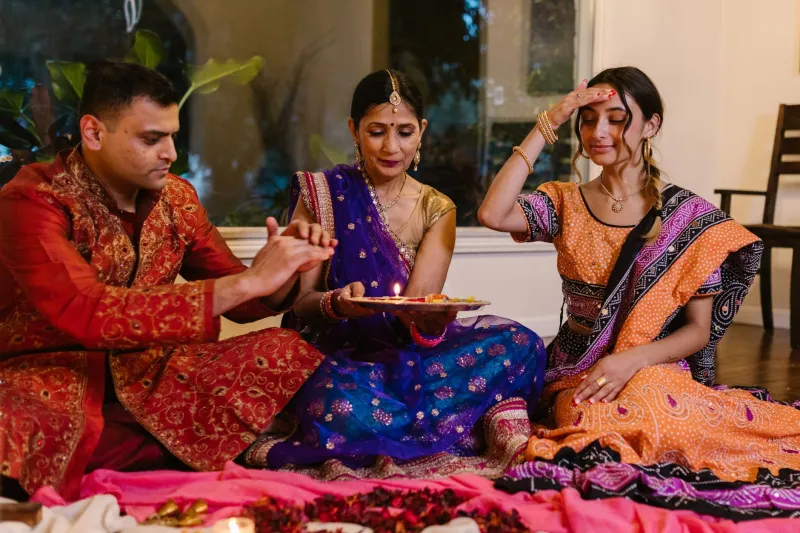
When Priya and Arjun Nair of Naperville, Illinois, sat down to choose a name for their daughter, they did not consult a baby-name website. Instead, they called Priya's grandmother in Kerala, who recited verses from a worn copy of the Vishnu Sahasranama over a crackling phone line. The name they settled upon—Anvesha, meaning "one who seeks"—was not selected for its sound alone. It was chosen, as Priya puts it, "because we wanted her first possession in this world to be a question, a direction, a purpose."
This scene, or some variation of it, is playing out with increasing frequency in Indian-American households from New Jersey to Northern California. A generation of parents who themselves may have grown up answering to shortened, Americanized nicknames—Raj instead of Rajarshi, Nina instead of Nirupama—are making a different choice for their children. They are returning, deliberately and sometimes defiantly, to the full depth of Sanskrit nomenclature. And in doing so, they are raising questions that ripple far beyond the naming ceremony itself.
The Belief Behind the Syllable
In the Hindu philosophical tradition, a name is never considered arbitrary. The concept of namakarana—the formal naming ceremony conducted in the weeks following a child's birth—is one of the sixteen samskaras, or sacred rites of passage, outlined in classical texts. The ceremony is not merely celebratory; it is understood to be an act of shaping. According to Vedic thought, sound is not simply acoustic phenomenon. It is vibration with consequence. The Sanskrit word nada, often translated as "sound" or "tone," carries within it the understanding that certain phonetic combinations carry specific energetic qualities capable of influencing the consciousness of the one who carries them.
Dr. Meena Krishnaswamy, a Sanskrit scholar and lecturer based in the Bay Area who works with diaspora families navigating traditional practices, explains it this way: "When a parent chooses a name like Dhruva—the name of the boy in the Vishnu Purana who became the North Star through unwavering devotion—they are not simply paying homage to a story. They are expressing an aspiration, a cosmological map for their child's inner life."
This is not metaphor for many families. It is lived conviction.
Navigating American Hallways
And yet conviction must meet the cafeteria. One of the most honest conversations unfolding within Indian-American communities concerns the practical friction that Sanskrit names can encounter in American schools, workplaces, and social settings. Names with unfamiliar consonant clusters or vowel lengths—Vaishnavi, Hrithik, Rugved, Aaradhya—are routinely mispronounced, misspelled on standardized forms, or quietly shortened by well-meaning teachers.
Research published in academic journals on labor economics has long documented what is sometimes called the "name penalty"—the measurable disadvantage that applicants with names perceived as foreign can face in hiring processes. For Indian-American parents who have navigated these systems themselves, the awareness of this reality is not abstract.
And yet, a growing number are choosing the Sanskrit name anyway—and doing so with clear eyes.
"We talked about it," says Vikram Rao, a software engineer in Austin, Texas, whose son is named Siddharth. "We knew there would be moments when his name would be a conversation starter rather than just a name. We decided that was fine. We wanted him to know the conversation was worth having."
This sentiment—that the friction of an unfamiliar name is itself a form of education, both for the child and for those around them—surfaces repeatedly among parents who have made this choice. There is, embedded within it, a quiet politics of presence: a refusal to pre-emptively smooth away cultural distinctiveness in exchange for social ease.
What the Research Reveals
The psychological literature on names and identity offers a compelling backdrop to this cultural moment. Studies on name-letter effects and nominative determinism suggest that individuals do, in measurable ways, develop affinities and self-concepts that align with the names they carry. More directly relevant is research on ethnic identity among second-generation immigrants, which consistently finds that a stronger sense of cultural continuity is associated with higher psychological well-being, lower rates of anxiety, and greater resilience in navigating bicultural environments.
For children who carry names that are embedded in a living tradition—names whose meanings can be explained, whose origins can be traced to texts and stories and ceremonies—there exists a ready-made narrative of belonging that transcends geography. A child named Kavya does not merely have an Indian name; she has a name that means "poetry," that echoes through centuries of Sanskrit literature, that connects her to a grandmother's prayer.
Dr. Ananya Sharma, a clinical psychologist in the Chicago area who works extensively with South Asian-American adolescents, observes that the name question often surfaces during identity formation in the teenage years. "Kids who have been given names with clear, knowable meaning—and whose parents have taken the time to explain that meaning—tend to have a more secure anchor when they are navigating the 'where are you really from' questions that inevitably come," she notes. "The name becomes part of their story, not a source of confusion."
The Ceremony Reimagined
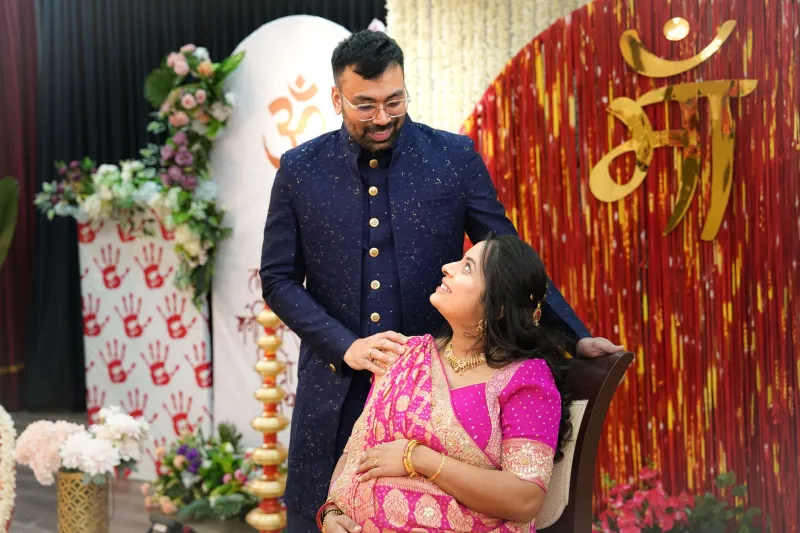
Perhaps equally notable is the way the namakarana ceremony itself is being adapted and reclaimed within American contexts. Families who may not have access to a family priest are consulting online communities, reaching out to temple networks, and in some cases, designing their own ceremonies that blend traditional Sanskrit invocations with the practical realities of an American living room.
YouTube channels dedicated to Vedic rituals for diaspora families have seen marked growth in viewership. Platforms and community organizations that connect families with learned practitioners—panditji available via video call from Varanasi or Tirupati—have reported increased demand. The ceremony, once assumed to require physical proximity to tradition, is finding new forms without, its practitioners insist, losing its essential character.
"The mantra does not lose its power because it is chanted over Zoom," says one mother in the Atlanta metro area who requested anonymity. "What matters is the intention, the preparation, the understanding of what you are doing and why."
A Name as an Act of Faith
At its heart, the movement toward Sanskrit names in Indian-American households is not simply a trend in parenting aesthetics. It is an expression of a deeper conviction: that the act of naming is among the most consequential things a parent will do, and that the inheritance of language, meaning, and spiritual orientation is worth protecting—even when protection requires some effort.
In a secular America that often treats naming as a matter of sound and style, these families are insisting on something older and weightier. They are saying, through the names they bestow, that their children arrive not as blank slates but as heirs to a vast and living tradition—one that begins, quite literally, with a word.
For Anvesha Nair, now four years old and already asking her mother what her name means, the answer is already in motion. She is, her name declares, one who seeks. In an America still learning to hold the full complexity of its own cultural inheritance, that may be precisely the right disposition to carry.